Starting an Interior Design Company: Our Complete Guide
- Nov 18, 2024
- 9 min read
Updated: Jan 12

This guide shares our personal experience of starting an interior design company and what we learned along the way. In our case, we started an architecture and interior design practice at the same time. Both Tim and I studied architecture and worked in architecture firms before opening our own studio.
I always had an interest in interior design, but never really pursued it at first. In the early days of the practice, we worked on a few interior projects, and I quickly realised how much I enjoyed that side of the work. Since then, I’ve done multiple interior design courses and tons of CPDs while working and travelling, alongside taking on smaller projects to gain hands-on experience and build confidence in interior design.
When we opened our practice, we knew we wanted to offer both architecture and interior design under one roof. With that in mind, here are our insights on how you can do the same when starting an interior design company.

Determining Your Niche
Before you even start to set up an interior design business, you need to determine your niche. This puts your work in front of people who are actually looking for it. Maybe you specialise in eco-friendly designs, high-end luxury, or small-space solutions. A specialism helps you avoid being compared to others just on price, but polarises you into being the right person for the project. You'll also align your marketing efforts and avoid toxic client relationships.
So how do you actually figure out your niche as an interior designer?
Start by looking at three things: what you enjoy, what you’re good at, and what people are willing to pay for. For us at ZAHRADA, we specialise in homes and hospitality. We enjoy working with couples and families, we love creating a homely feeling environment, whether it's a home, a cosy hotel, or a relaxing wellness experience. This niche is close to our heart, and we developed a style that speaks to certain people.
If you are interested in how to build your brand, look into: How to Build a Brand in Architecture and Interior Design.
Setting Up The Essentials
Once you know what you want to specialise in, it's time to really start setting up your interior design business and all the practical essentials.
Register & name your business
First, decide how you want to operate. Many interior designers start as sole traders and move to a limited company later, once the business grows. Tim and I started a limited company straight away. You will need a business name to do that.
We named our practice ZAHRADA, in Slovak, this means garden. There is no specific poetic meaning behind this name; we just really love that word in Slovak, we love how it's written and how it comes off the tongue. Perhaps this can mean transferring gardens to living spaces, but we gave that thought to it after we had already chosen the name.
Get insurance
When we chose our insurance, we worked with a broker, which made the process much easier. When choosing insurance, make sure you work with someone who specialises in working with architects and interior designers, as they’ll understand the risks specific to the industry. You can also get great guidance from ARB - Architects Registration Board and download their Professional Indemnity Insurance Guidance PDF.
Prepare your contracts & systems
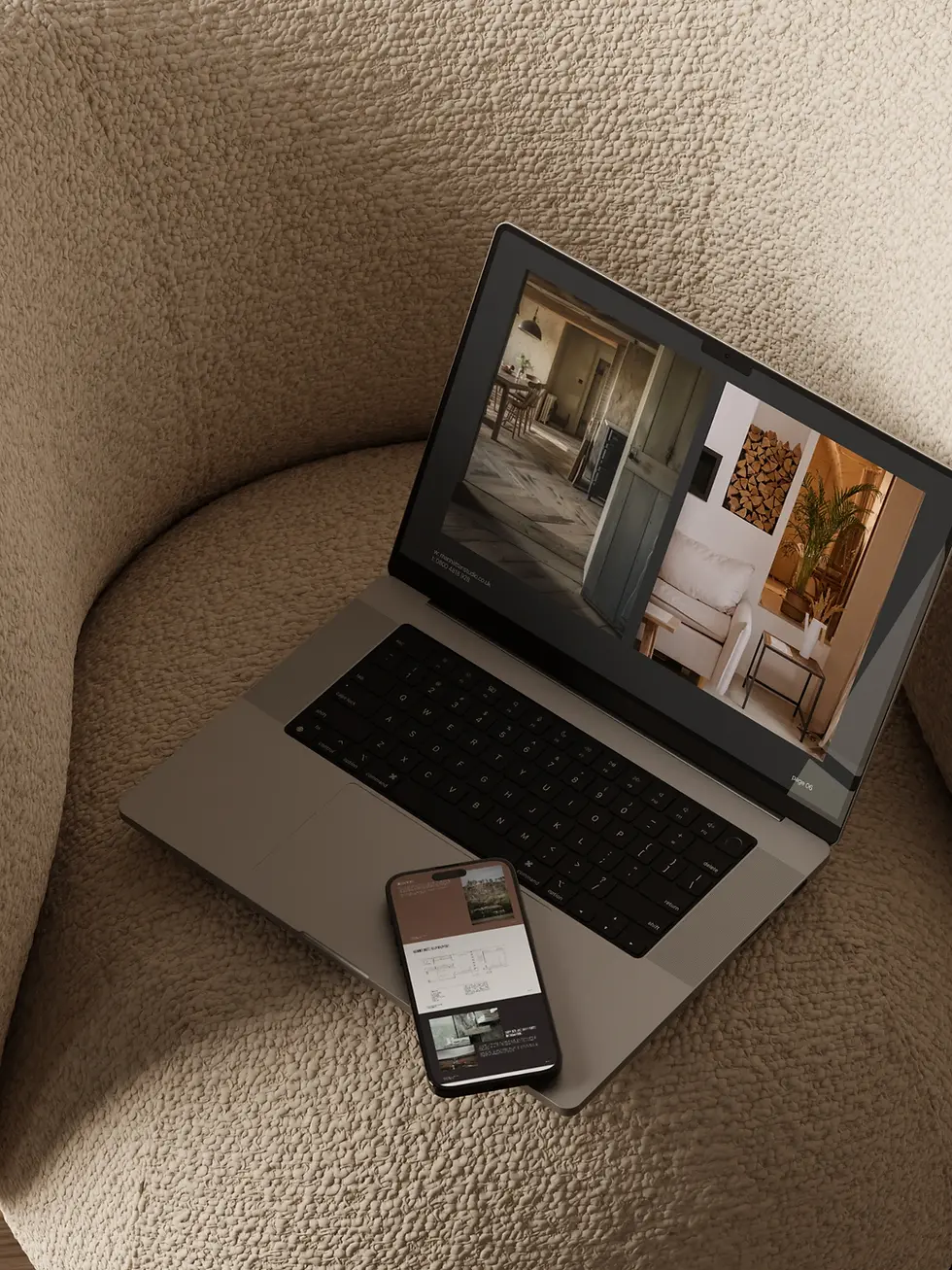
Templates for emails, proposals, and project tracking save time and make you look professional from day one. This also sets expectations from the start and protects both you and your client if things don’t go to plan.
Tim and I prepared a set of templates, which has helped us in the long run and played a big part in defining our brand. This also became the starting point of our architecture templates business.
We’re both planners and like to have a clear strategy in place ahead of time. We definitely have introverted traits, but they’ve proved to be very useful.
At a minimum, you should have:
Client contracts that clearly outline the scope of work, responsibilities, timelines, and deliverables
Fee structures that explain how you charge (fixed fee, hourly rate, or percentage), when payments are due, and what’s included or excluded
Terms and conditions covering things like payment terms, cancellations, variations, and liability
You can find all the essentials for starting an interior design company here.


How Much Your Interior Design Business Should Charge
Tim and I used to undercharge for this massively, and it took us a few projects to get it right. We realised that sometimes a project simply isn’t worth our time, the client’s budget wouldn’t allow us to provide the level of detail we’d like to deliver, and that’s okay too. Research your market, calculate your value, and set clear pricing, whether it’s hourly, flat, or percentage-based.
There’s no universal formula for pricing interior design services, but we tried our best to give you some more guidance here.
Once we are happy with the price, we always send out our pricing using our ZAHRADA-branded Fee Proposal.
How to Start Getting Interior Design Clients
Tim and I started 2026 by writing a list of our red-flag and green-flag clients, along with our values and goals. We also created a persona of our ideal client to get a clear vision of who we actually want to work with. You can use our 40-page free client guide to identify your strengths and build a clear client persona.
But to be brutally honest, most of our clients come through word of mouth. We always make sure our work is detailed, and we keep close relationships with existing clients. In a world full of AI and constant online presence, being real and building genuine relationships still goes a long way.
The second best way we get clients for us is SEO. We make sure our website ranks in the area we’re based in and that we use the right wording to attract the clients we want to work with. Most importantly, it helps set the tone for our values and branding.
We’re also slowly building our Instagram; this one’s definitely a work in progress for 2026.
There are other strategies for attracting the right interior design clients, but it’s good to start with just one or two, so you don’t fall over yourself. Once you’ve mastered one, you can add another.
How to manage clients as an interior designer
The most important part of managing clients for us is the initial consultation. This is where we figure out if the client is the right fit for us, and if we’re the right fit for them. I can’t stress how important this stage is for us. It all starts with asking the right questions.
A well-prepared questionnaire helps uncover your client’s vision and sets the foundation for a clear, professional working relationship.
We like to meet clients in person before sending a fee proposal and asking them to sign it. This gives both sides the chance to ask questions, align expectations, and make sure it feels right before moving forward.
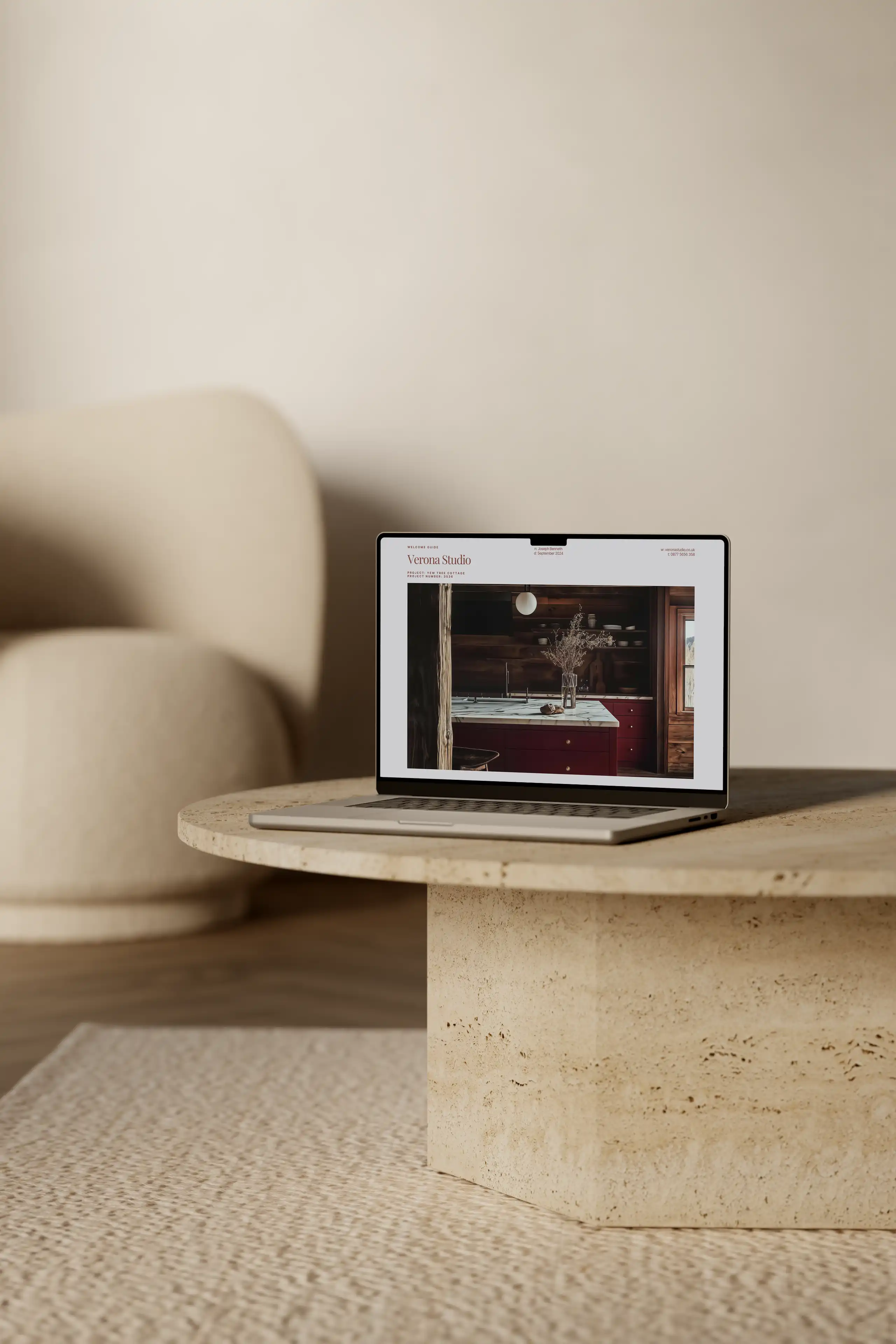
After that, we send out our welcome guide, which helps us set expectations early on and makes the next steps clear from the start.
This usually includes a design brief, so the client can check that we’ve understood the brief correctly before we even start.
We would normally include our core values and an introduction to our team, which, in our case, is just Tim and me, so clients know who their main point of contact will be. This is especially useful in larger teams.
The welcome guide also includes our project scope, so it prepares the client for what will await them during the project.
And last but not least, we make sure the client understands their role, obligations, and payment terms.
During the process, we make sure to update clients every Friday by email. We let them know where the project is at, who we’re waiting on, or even if nothing is happening that week, so clients don’t feel forgotten and stay in the loop.

Where To Start with Marketing for Interior Designers
There are many platforms you can use to start marketing your business, and it can feel very overwhelming. One mistake we made at the beginning was trying to do everything at once, which eventually forced us to take a step back. The most important marketing strategy for us has been building a good reputation and having a well-ranking website.
Creating an interior design website
Start with your website. It’s your main portfolio and usually the first touchpoint. Make sure it’s clear, visual, and speaks to the right person. Tim and I are constantly tweaking the wording as we evolve. There are lots of platforms you can use to build your website. We like WordPress/Elementor as it’s cheaper to run, although it’s a bit more complex to navigate. We also like Wix Studio, which is very drag-and-drop with plenty of ready-made templates, but it can be slightly more expensive depending on the plugins.
Using social media
Social media can be a powerful tool for interior designers. Our goal for 2026 is to build our presence on Instagram and Pinterest for ZAHRADA. These platforms allow you to share your projects, process, and aesthetic in a way that words alone can’t. Over time, this helps potential clients understand your style and decide whether you’re the right fit. That said, social media doesn’t need to be your main marketing strategy. In our experience, it works best as a supporting tool alongside a strong website, SEO, and word of mouth. That’s worked well for us in the past, but this year we’re taking a more intentional approach by creating a clear social media strategy for the ZAHRADA Instagram.
Email marketing
Email marketing is often overlooked by interior designers, but it can be a really effective way to stay connected with both existing and potential clients. At the moment, we mainly use email marketing for our architecture templates, and it’s been an amazing tool for staying connected with you.
Setting up a Google Business Listing
Setting up a Google Business Profile is one of the simplest and most effective things you can do to improve your visibility as an interior designer, especially locally. A Google Business listing helps your studio show up in local searches and on Google Maps when potential clients are actively looking for an interior designer in your area.

What Tools Do I Need as An Interior Designer to Get Started?
Tim and I have a solid set of tools that we always rely on, but we also like to experiment and try new tools as they come onto the market, especially when it comes to drawings and CGI.
Creative Tools
For creative work, we mainly rely on Pinterest to gather inspiration and shape early concepts. From there, we develop ideas through quick, loose sketches using Morpholio Trace and Procreate.
This allows us to explore layouts, proportions, and ideas without overcomplicating things at an early stage. Our process usually starts with Pinterest boards, followed by sketching over plans or references to communicate the direction clearly.
Technical Tools
Technical tools are what take a project from concept to something tangible. We mainly rely on industry-standard software like AutoCAD, SketchUp, and ArchiCAD, depending on the type of project.
When it comes to visuals, rendering tools like Lumion and D5 Render help communicate designs clearly to clients. We’ve recently shifted towards D5 Render, as it offers strong lighting and visual quality at a much lower price point.
Financial Tools
Financial tools are essential for running a smooth interior design business. From tracking expenses to managing cash flow. We use accounting software like Xero and QuickBooks, both of which handle invoicing, expense tracking, and reporting well as a business grows.
For designers on a tighter budget, Zoho Books is a solid, affordable option with good project and budget tracking. Our own setup combines Monzo for business banking with Xero for accounting. I cannot recommend this enough.
The integration means we can see profit and loss in real time, track VAT easily, and understand exactly where money is going each month.
Start with a solid core setup, stay curious, and only experiment with new tools when they truly add value to your process.

Growing Your Interior Design Business
Once your business is set up, you can start focusing on growth. Tim dives deeper into this in his weekly email newsletter; you can sign up here.
Investing in professional photography after a project is finished is so important. We found our photographer at a networking event, not something we normally do, but it turned out to be a great decision. We instantly connected with his work and values, and hopefully, it’s the start of a long-term partnership.
Ask your clients for testimonials. We’ve always preferred word of mouth over any online marketing strategy, and testimonials feel like a natural extension of that. If you have a good relationship with your clients, asking for feedback helps build trust and adds a human touch to your website.
Reach out to magazines or online platforms for collaborations. If your work fits their style and values, it’s worth starting a conversation. Something we are exploring this year. These collaborations can add credibility and help your work reach the right audience without feeling overly promotional.
Conclusion
Starting an interior design company takes time, patience, and a lot of learning along the way. There’s no single right way to do it; what matters most is building a business that aligns with how you want to work and who you want to work with. Start simple, put solid systems in place, focus on the right clients, and allow your business to evolve as you grow. If there’s one thing we’ve learned, it’s that consistency, clarity, and staying true to your values will take you much further than chasing quick wins.
Need help getting started? Download my 40-page client guide packed with templates and strategies to set you up for success. And for daily inspiration, tips, and advice, follow me on Instagram @architecture_templates.
If this sounds exciting - what’s stopping you?
Tim & Zofia, Architecture Templates


